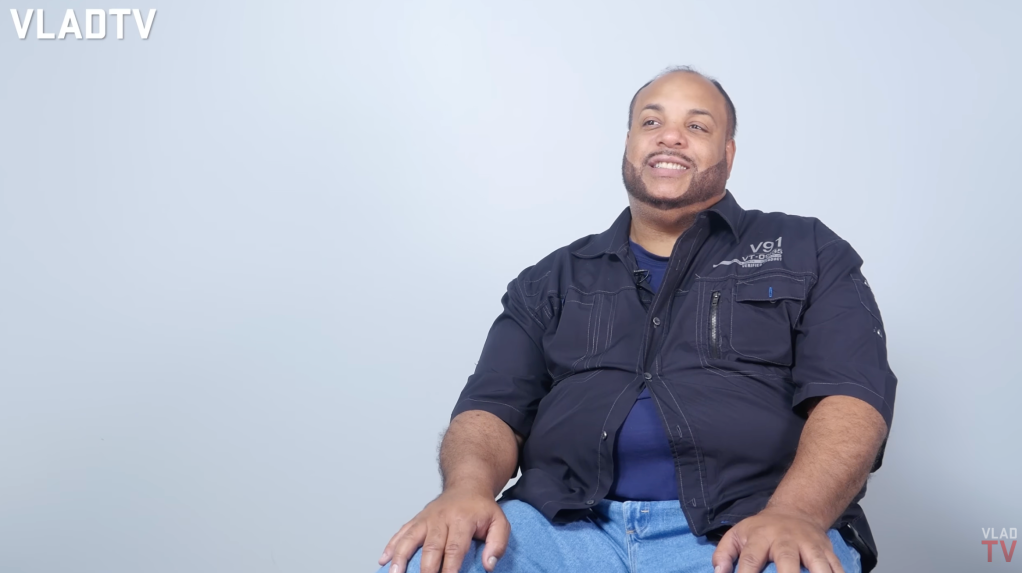
As spotted on The New York Times, Parker died July 24 at a hospital in East Meadow, N.Y., after suffering a heart attack, according to his brother Strickland Parker. His death closes the chapter on a unique and sometimes controversial career that placed him at the intersection of New York City policing and Hip-Hop during some of the culture’s most turbulent years.
Parker joined the NYPD in 1982 after studying public administration at St. John’s University. He initially worked as a beat cop in Midtown Manhattan before becoming an undercover narcotics officer in the Bronx. He eventually became one of the department’s youngest detectives and spent roughly a decade working homicide cases in Brooklyn’s Bedford-Stuyvesant neighborhood.
In 1996, Parker joined the NYPD’s newly created cold-case unit. His familiarity with Hip-Hop, along with relationships he had developed throughout New York’s music scene, increasingly made him the detective other officers turned to when rappers, record executives or their entourages became connected to criminal investigations.
After the 1997 murder of The Notorious B.I.G., Parker reportedly gave fellow officers an extensive briefing on the major figures and conflicts within Hip-Hop at the time. By 1999, he was leading a rap-focused intelligence operation housed within the NYPD’s Gang Intelligence Unit.
The operation would eventually become popularly associated with what many called the NYPD’s “Hip-Hop Police.” Parker attended concerts, clubs and industry events while gathering information about artists, their entourages and potential conflicts. Before certain appearances, he could brief officers on who was traveling with an artist and whether there were known security concerns.
The practice was controversial, particularly as questions grew over police surveillance of rappers and the collection of information about people connected to the culture. Parker, however, maintained that his objective went beyond putting artists behind bars. He once described his larger goal as helping law enforcement understand Hip-Hop while attempting to “protect Rap music from itself.”
Over the course of his career, Parker became involved with several cases that remain infamous within the culture.
He worked on investigations connected to the murders of Tupac Shakur and The Notorious B.I.G. and was called in following the 1999 Club New York shooting involving Sean “Diddy” Combs, Jennifer Lopez and Shyne. Parker was also brought into the aftermath of a 2001 Manhattan shooting involving members of Lil’ Kim and Capone’s respective entourages during the height of Kim’s feud with Foxy Brown.
His connection to the investigation into the murder of Run-DMC legend Jam Master Jay became another significant part of his legacy. Jason “Jam Master Jay” Mizell was shot and killed inside his Queens recording studio in October 2002. Parker later said that he protected one of the few surviving eyewitnesses to the killing and maintained that he had developed information regarding both those responsible and the motive behind the shooting. His work surrounding the case became one of the central subjects of his eventual memoir.
Parker retired from the NYPD in 2002 after 20 years on the force, but his connection to Hip-Hop and law enforcement continued. He entered the private security world, initially working with longtime friend and business partner Glen Beck before the two formed their own company. Parker provided security for nightclubs, concerts and wrestling events and had previously moonlighted with the World Wrestling Federation, now WWE.
Even after leaving the department, Parker remained a resource for investigators dealing with cases involving the music industry. Detectives and police officials reportedly continued reaching out to him for insight long after his retirement.
In 2006, Parker and journalist Matt Diehl released Notorious C.O.P.: The Inside Story of the Tupac, Biggie and Jam Master Jay Investigations from the N.Y.P.D.’s First “Hip-Hop Cop.” The book detailed Parker’s career and provided his perspective on several of Hip-Hop’s most infamous crimes, including the deaths of Shakur, Wallace and Mizell.
Parker’s position within Hip-Hop history remains a complicated one. To critics, the intelligence operation he helped establish represented the increased surveillance of rappers and their associates law enforcement. To Parker, his knowledge of the culture allowed him to operate as a bridge between two communities that often distrusted one another.
Either way, few police officers had a closer view of the events that shaped Hip-Hop’s relationship with law enforcement during the 1990s and early 2000s.
Derrick Parker is survived his brothers Strickland, Ralph, Tracy and Lionel Jr., and his sister, Tonea Parker.